

Legal permanent residents (aka green card holders), are permitted to travel in an out of the United States. However, this freedom of movement comes with certain rules and limitations. During times of heightened immigration enforcement, green card holders must know the rules to avoid costly delays and denied entries. Here at Baibak Law, we empower legal permanent residents (LPRs) by helping them maintain their legal status and manage risks specific to their unique circumstances.
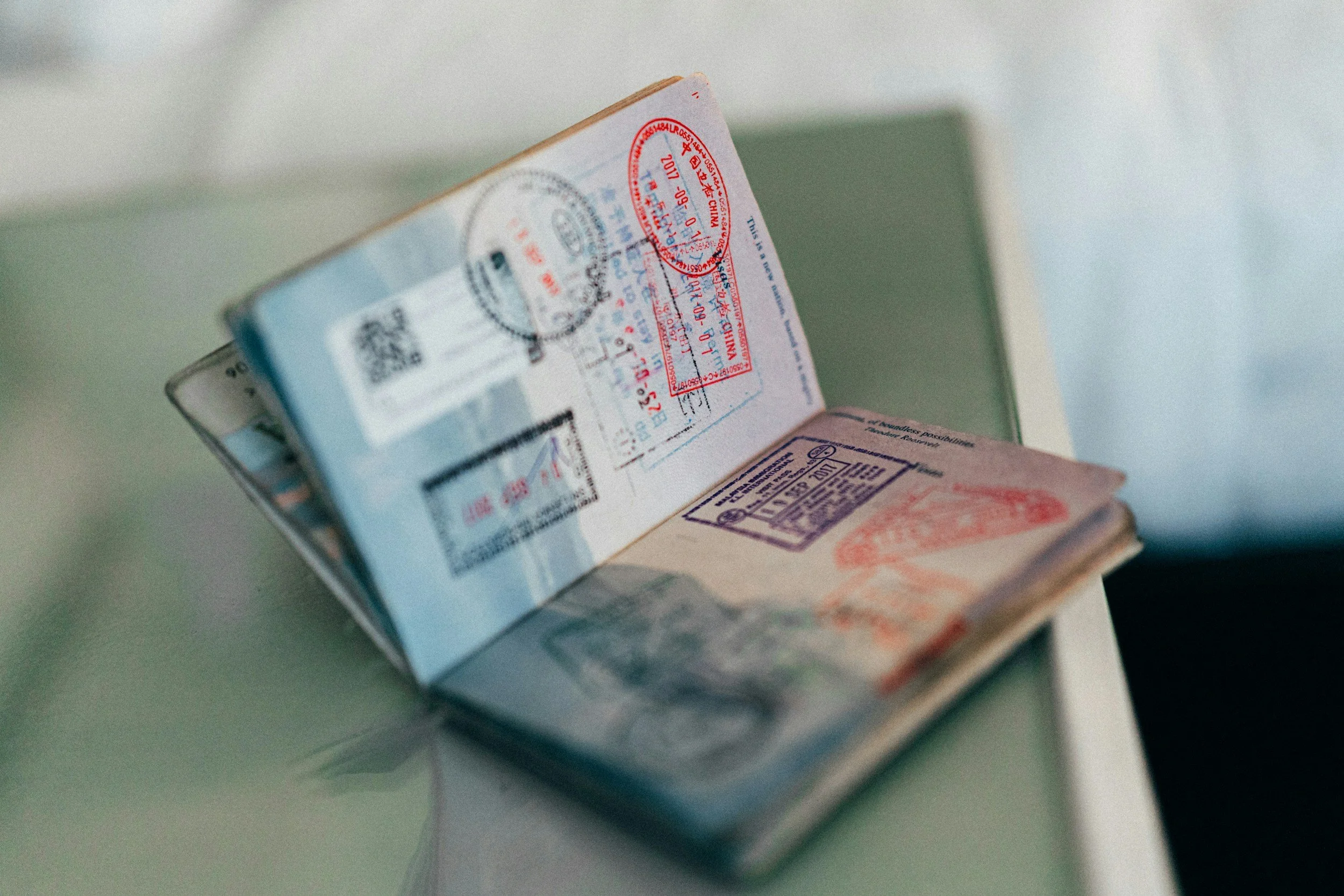
Proper Documentation
What documents do I need to enter my desired destination country?
Traveling with a green card is not the same as traveling with a U.S. passport. Generally, the requirements to enter a country depend on the person’s country of citizenship, not their green card status.
A green card may grant visa-free or visa-on-arrival access to specific countries, such as Canada and Mexico, regardless of nationality. However, such policies are subject to change. LPRs should always double-check current consular rules before traveling. You should see the Department of State’s “Planning Your Travel” webpage for general travel information as well as the destination country’s official government website.
What documents do I need to re-enter the U.S. as a legal permanent resident?
To re-enter the United States as an LPR you must have a valid, unexpired green card (Form I-551) and a valid, unexpired passport from your country of citizenship. (In certain circumstances, you may also need a refugee travel document.) Your passport should be valid for the duration of your intended stay, or at least 6 months as a good rule of thumb.

Maintaining Status
Can I lose my legal permanent resident status if I stay outside of the U.S. too long?
Yes. Whether you lose or maintain your LPR status depends on the length of your time outside the U.S.
Trips Under Six Months are generally safe and traditionally face minimal scrutiny upon re-entry.
Trips of Six Months to One Year trigger a higher level of scrutiny. Customs and Border Protection (CBP) officers may question whether you truly intend to make the U.S. your permanent home. You, the green card holder, must show that you have maintained continuous ties to the U.S. (discussed in greater detail below).
Trips Over One Year automatically invalidate a green card for re-entry purposes, unless a Re-entry Permit was secured before leaving the U.S. (see below).
What evidence can I give to CBP as proof of my continued ties to the U.S.?
For trips over six months, be prepared to present documents showing that you have maintained ties to the U.S. Some common evidence includes:
Proof of financial ties to the U.S., such as:
U.S. federal and state returns
U.S. bank statements
Insurance for property held in the U.S.
Proof of current employment in the U.S., such as:
Recent pay statements
Employment contracts
Job offer letters
Proof of maintaining a home in the U.S., including:
Lease agreements
Mortgage statements
Property deeds
Proof of immediate family residing in the U.S. while you were abroad, such as:
Medical bills
Enrollment of children in U.S. schools
Proof of ties to your local U.S. community, including:
Memberships to U.S.-based organizations
Receipts from donating to local, U.S. charities
Carry all documents with you in your carry-on luggage or purse.
When might I need a re-entry permit?
Sometimes LPRs need to spend extended time abroad, perhaps due to a temporary job assignment abroad or to care for an ailing relative. LPRs planning extended stays overseas may need a Re-entry Permit. It is best practice to apply for a Re-entry Permit if you plan to be outside the United States for over six months. If you plan to be outside the U.S. for over one year a Re-entry Permit is required.
The Re-entry Permit is a way of officially telling the U.S. government that you, the green card holder, do not want to abandon your LPR status, despite your extended time abroad. It is strong evidence that you intend to reside permanently in the U.S.
Green card holders must apply for a Re-entry Permit while they are still physically in the U.S. It is best to complete the biometrics appointment before departing the U.S. to avoid issues upon re-entry.
Re-entry Permits are usually valid for up to two years. If you think you may be abroad for longer than two years, you can apply for a Returning Resident Visa – or SB-1 – at your local U.S. Embassy or consulate abroad.

Managing Risks
What factors may make international travel riskier?
Pending Green Card Renewals (Form I-90):
LPRs should never travel with an expired green card. If your green card is expired, or will expire soon, you should file Form I-90 to renew your green card. While your I-90 is pending, you must travel with your official receipt notice (Form I-797), which officially extends your card's validity for a set period. If the extension of your green card’s validity listed on the receipt notice expires, and you still do not have your new green card, you can obtain an ADIT (Alien Documentation, Identification, and Telecommunication) stamp in your passport (I-551 stamp) from a local USCIS office.
Conditional Green Cards (2-Year):
Entrepreneurs and spouses of U.S. citizens are often first issued conditional, two-year green cards. Conditional green card holders should be mindful of the expiration date of their green cards and their specific filing windows to lift their conditions (Form I-751 or I-829). Your conditional green card must be valid when you return to the U.S.
After you file Form I-751 or I-829 to lift your conditions, you will receive a receipt notice (Form I-797), which extends your green card for a specific period (usually 24 to 48 months). You must carry your receipt notice while you travel to maintain your status. Again, if the extension listed on your receipt notice expires while your case is still pending, you can obtain an ADIT stamp in your passport.
If your conditional green card is based on marriage, travel with documents showing the validity of your marriage (such as proof of joint finances or children in common).
Criminal History:
In times of heightened scrutiny at the border, even minor criminal offenses can trigger issues upon re-entry. If you have a criminal history or pending criminal charges, consult a trusted legal advisor before traveling abroad.
Complex Immigration History:
Similarly, LPRs with complex immigration histories – such as prior time out of status, previous removal orders, alleged misrepresentation in past applications, etc. – should consult legal counsel. Even if these issues were disclosed during the green card application, they may cause additional questions and delays at the border.
What happens if I am placed in secondary inspection?
CBP may refer a traveler to secondary inspection for various reasons. If you are pulled aside for additional questioning, remain calm. Answer the officer’s questions truthfully. If detained, contact legal counsel immediately. Never agree to abandon your LPR status. If asked to renounce your LPR status, instead state that you wish to maintain your LPR status and that you need to talk to an attorney.

Impacts on Naturalization
Does international travel affect when I can apply for citizenship?
Sometimes. When LPRs apply for US citizenship they must prove that they have satisfied the “continuous residence” and “physical presence” requirements. “Continuous residence” means that the applicant has resided continuously in the U.S. for five years (or three years for qualified spouses of U.S. citizens). An absence of more than six moths may break “continuous residence” for naturalization purposes. Absences of more than one year will automatically break “continuous residence.”
“Physical presence” means that that applicant has remained physically present in the U.S. for at least half of the relevant time period: thirty months out of the last five years for most applicants and eighteen months out of the last three years for qualified spouses of U.S. citizens. Days spent outside the U.S. counts against the required total. Frequent short trips abroad can add up and disrupt “physical presence” if not properly monitored.
For more information on “continuous residence” and “physical presence” check out our blog post on the subject.
Can I travel internationally while my N-400, Application for Naturalization, is pending?
Yes. LPRs with pending N-400s, or Applications for Naturalization, are permitted to travel internationally. Leaving the U.S. will not automatically cancel your N-400 Application. Applicants for naturalization should be careful to monitor their myUSCIS online accounts and physical mailbox while abroad to ensure that they do not miss important appointments, such as the biometrics appointment or naturalization interview. Furthermore, applicants must satisfy the “continuous residence” and “physical presence” on the date of their naturalization interview. They should, therefore, be careful that the present trip does not tip the scales against satisfying these requirements.
Conclusion
Legal permanent residents often wish to travel internationally to their home countries and other destinations. However, leaving the U.S. always comes with some risks. It is crucial that LPRs understand their unique risks and how to mitigate these challenges. Here at Baibak Law, we can help you maintain your hard-earned LPR status by gathering proper documentation and understanding your rights to ensure a smooth re-entry into the United States. If you would like to discuss your particular situation and travel plans, please contact us at (513) 203-5429 or schedule an initial consultation online.
Disclaimer: The information provided above, and on our website, is intended for general information purposes only and should not be construed as legal advice. This blog post shall not create an attorney-client relationship with the readers of its content.